
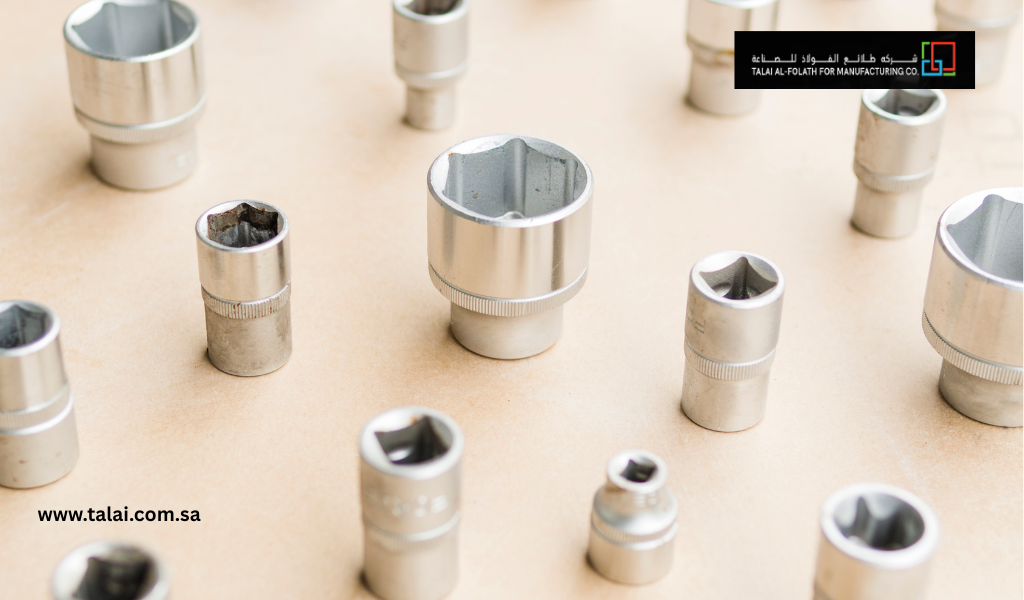
When we think of strong buildings, our minds tend to leap to concrete, steel structures, or thoughtful design. We hardly ever take our time to think of the smaller, quieter bits working in the background. But a lot of these invisible components are hugely important for keeping things upright and comfortable and long-lasting. This is particularly the case for stainless couplers.
Stainless steel couplers, used widely in construction and civil engineering, provide a means to connect reinforcement bars. Even though they may seem simple, their role in structural strength, durability, and economy is anything but. Why do these couplers matter, and why are so many of today’s construction projects opting for them?
What Are Stainless Steel Couplers?
Mechanical connectors for substation rebar are made of stainless steel and are designed to connect two reinforcement bars together. Coupling splicing Rather than relying on overlapped bars and tied wire, a coupler forms an optimal connection directly transferring the load from one bar to another.
The most frequently used cabling is in concrete structures: bridges, high-rise buildings, tunnels, and foundations, as well as industrial applications. The stainless steel construction of these bolts provides excellent corrosion resistance and long-lasting strength.
Stronger Connections Mean Stronger Structures
The bond between steel and concrete is the key to any reinforced cement concrete structure. If they are not connected properly, the entire building can be flawed.
Stainless steel couplers also provide a continuous load path between bars. So force is applied evenly across the board, and there are no weak spots. As opposed to conventional lap splicing that depends on the strength of concrete and development length, a direct mechanical connection is achieved between two steel bars using couplers. The end result is a joint that’s often as strong as, or even stronger than, the rebar itself.
This combination of strength is particularly useful in high-stress, heavily loaded, or seismic zones. Couplers also assist in providing overall structural integrity by reducing the likelihood of uncertainties at joints.
Excellent Corrosion Resistance
Corrosion is one of the most serious problems for R.C. structures. Moisture, chemicals, salt, and pollution can gradually wear away at steel parts, weakening them. That is where the stainless steel really shines.
Suitable stainless steel couplers are able to be provided even in corrosive conditions, such as coastal and marine structures, sewers, bridge decks, and other structures that incorporate the use of salt. Given that they are rust-resistant, they will continue to hold strong for decades with virtually no risk of failure and costly repairs.
For projects that are planned to have long service lives, corrosion resistance is not a feature—it’s a requirement.
Read More: Why Steel Rebar Coils Are Gaining Demand in Large Infrastructure Developments?
Longer Lifespan and Reduced Maintenance
Buildings and infrastructure are investments that last for decades. Continuous maintenance, examination, and replacements translate to increased running costs. Stainless steel couplers offer a way to join reinforcing bars without the risk of impurities.
Since these couplers are resistant to corrosion and do not weaken over time, the occurrence of hidden damage in concrete is minimized. This results in less maintenance effort and hence reduced lifecycle costs. In the decades to follow, the higher up-front material cost is actually the wiser and more economical choice.
Space-Saving and Cleaner Reinforcement Design
In the case of a conventional lap splice, extra rebar length is needed, and this results in congestion in concrete. In those heavy reinforcement areas, this clumping feature will make it quite challenging to install your concrete correctly, leading to voids and poor points.
The use of 304 stainless steel couplers eliminates the lapping of bars. This results in cleaner reinforcement installations, better flowing concrete, and improved compaction. The outcome is a more compact, stronger concrete and one that does not pose as many construction difficulties.
This room-saving prowess is especially valuable in columns, beams, walls, and similar constrained spaces.
Faster and More Efficient Construction
Time matters on construction sites. Delays can drive up costs and delay schedules. The use of stainless steel couplers can ease the construction process by reducing the installation times and improving the accuracy.
Instead of cutting bars, bending them, and lapping them over other bars, workers can connect them with couplers. This saves labor time, streamlines planning, and increases the general site efficiency. Plenty of couplers are made so that they can fit into tight or oddly shaped spaces.
The time savings from this can add up for large projects.
Improved Safety on Site
For construction work, safety is always a concern. There are a number of reasons why stainless steel couplers help to make conditions safer.
They minimize rebar congestion and lower the risk of cuts and gouges from protruding steel ends. And their snug fit provides perfect alignment for reinforcement, minimizing potential deflection or failure during the pour.
Moreover, since it is possible to prefabricate reinforcement sections with the use of couplers, less work at height and in limited accesses is required, thus further enhancing site safety.
Ideal for Sustainable Construction
Sustainability is becoming the biggest concern of the construction industry now. Stainless steel couplers are environmentally friendly due to their material savings in reducing waste and best use of space.
Lap splicing is less material-efficient than a butt splice since lap splicers use more steel to begin with. This waste is avoided when using couplers, which are then able to save on steel thinking. They also last a long time, meaning fewer instances of replacement and repair—which is better for the environment in the long run.
When you want a lower environmental impact or will need to meet sustainable standards and green building certifications, stainless steel couplers are the intelligent choice.
Versatility Across Construction Projects
Stainless steel couplers are appropriate for many applications. Applicable to a variety of construction, including residential housing, multi-unit developments, and major civil engineering projects, they can be relied upon across a wide range of applications.
They are commonly used in:
- Bridges and flyovers
- High-rise buildings
- Marine and coastal structures
- Industrial plants
- Foundations and retaining walls
- Seismic-resistant designs
This flexibility has made them a staple product for engineers and contractors globally.
Tiny Die with Big Effects
When contemplating monumental buildings and infrastructure projects, it’s easy to ignore something as small as a coupler. But these pieces are critical to strength, longevity, and safety.
The use of stainless steel couplers for joining reinforcing bars has grown and is largely used today in the U.S. Other countries employ thousands of welders, many working to repair bridges due to poor maintenance practices, which have been repaired with other bridge-coupler systems. They are what keep structures solid, and not just now but for decades to come.
In the era of modern construction, when performance and safety are top of the agenda, stainless steel couplers are no longer seen as a luxury item; they’ve become an essential feature in building stronger structures faster-20% — more economically than ever before.
FAQ’s: Stainless Steel Couplers in Construction
What are stainless steel couplers used for?
Stainless steel couplers are used to connect reinforcement bars in concrete structures. They provide a strong mechanical joint that transfers loads efficiently between rebar sections.
Why are stainless steel couplers better than lap splicing?
Unlike lap splicing, stainless steel couplers create a direct connection without overlapping bars. This reduces steel usage, improves structural strength, and avoids rebar congestion in concrete.
Do stainless steel couplers improve structural strength?
Yes, they create continuous load paths between reinforcement bars, helping structures handle heavy loads, stress, and movement more effectively.
Are stainless steel couplers resistant to corrosion?
Stainless steel couplers offer excellent corrosion resistance, making them ideal for coastal, marine, industrial, and high-moisture environments.
Where are stainless steel couplers commonly used?
They are widely used in bridges, high-rise buildings, foundations, tunnels, marine structures, and seismic-resistant construction projects.