
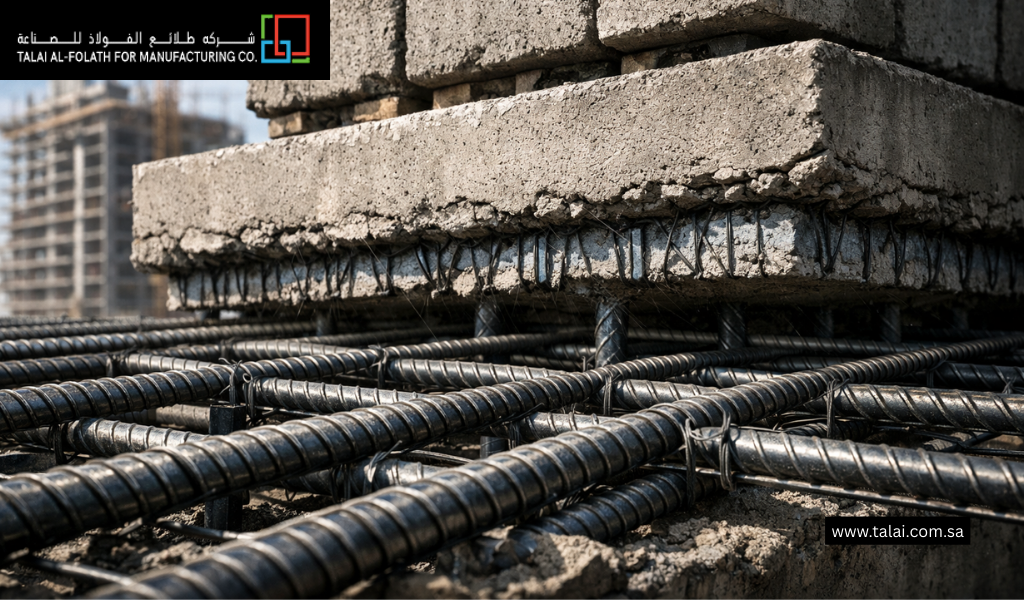
In new construction, strength is a requirement, not just a performance preference. All buildings, all bridges, every flyover and all industrial structures are held together by materials that can withstand pressure, weight and time. The steel bars that provide much of this structural fortification are made from a solid material known as rebar.
A silent yet strong character in construction is the steel reinforcement bar. They are also hidden behind concrete structures, but they ensure safety and stability for the life of the project. Without them, concrete by itself would be hard-pressed to take on tensile stress and heavy loads.
Let’s look at why steel reinforcement bars are dubbed to be the backbone of modern construction and how they are fashioned for toughness and maximum load-bearing capacity.
Understanding Steel Reinforcement Bars
Concrete has a high strength in compression and essentially no strength in tension. That means it can withstand a lot of weight on top of it but could also crack or fail if stretched or bent. That’s where steel rebar comes in.
Concrete is reinforced with the steel bars for increased tensile strength. The result is a concrete steel composite (CSC) that is strong, resilient and able to resist a range of structural forces.
Rebars are available in a variety of grades, diameters and surface textures. The ribbed or deformed bars are particularly favoured since their rough texture enhances the bond with the concrete, which reduces slipping during peak strain.
Why Durability Matters in Construction?
- Durability now is about more than strength; it is about performance over decades. Buildings and infrastructure must withstand:
- Heavy traffic loads
- Weather changes
- Moisture and corrosion
- Seismic activity
- Industrial stress
Reinforcement bars of high-quality steel are manufactured to resist corrosion, cracking and fatigue. This is to keep the buildings safe and solid for all their years to come.
When it comes to moist or coastal environments, the need for rust-proofing is amplified. The use of high-quality steel and application-specific materials (excluding stainless steel hoses) offers increased resistance to corrosion and environmental influences.
Also Read: Steel Rebar Coils Explained: Benefits, Applications and Quality Standards
The Greater Strength of Steel Rebars
Rebar is used primarily to increase a reinforced concrete member’s tensile strength, and double rebar can help minimise cracking. With weight or load upon a structure, concrete and steel share the load/stress.
This is why steel rebar improves the load performance:
Tensile Strength Support
Steel has high tensile strength. As beams or slabs begin to bend under a load, they absorb tensile forces—those tending to pull them apart—that would otherwise create cracks and cause building failure.
Flexibility and Ductility
Steel, being ductile and not a brittle material. It has the ability to flex before fracture, ensuring other potential indicators of failure. This characteristic is particularly advantageous in earthquake regions.
Stress Distribution
Reinforcement bars: Rebars help in equally transferring the loads on the building. This takes pressure off of certain parts and provides better physical balance.
Enhanced Structural Integrity
If they had been well designed and placed, the steel reinforcement bars would have made the whole structure work together as a whole rather than as different pieces.
Types of Steel Reinforcement Bars
Different kinds of reinforcement bars are used for different construction works. Some common types include:
Mild Steel Bars
They are smooth, uniform bars. They are flexible and easy to work with but are seldom used in heavy structural construction.
Deformed Steel Bars
These bars are also provided with rack- or lug-like protrusions in the surface thereof. This pattern increases the bond between the steel rebar and concrete.
TMT Bars (Thermo-Mechanically Treated Bars)
Because TMT bars are very strong, highly corrosion resistant, and ductile. They work great on residential, commercial and industrial applications.
Stainless Steel Bars
For projects requiring corrosion resistance, stainless steel is the recommended material. While more costly up front, it has excellent wear characteristics in a variety of applications, including marine, chemical and high-moisture.
Corrosion Resistance and Long-Term Performance
Reinforced concrete buildings are mainly susceptible to corrosion. When steel rusts, it expands. This growth results in a buildup of internal pressure within the concrete from the expansion, which may contribute to cracking and deterioration of the material.
Constructed in good-quality steel or stainless steel helps reduce chances of corrosion. Furthermore, coatings protect the pipe from deterioration and are necessary for a long service life.
Anti-corrosion reinforcement plays an important role in infrastructure projects such as bridges and highways; it is conducive to the decrease of maintenance cost and prolonged service life.
Role in Sustainable Construction
Sustainability is very closely related to durability. A building that lasts longer needs to be repaired and replaced less and therefore reduces the amount of material used and energy consumed.
Steel is also 100% recyclable. Rebars are able to be recycled and given use without suffering deterioration. This is what makes steel one of the most eco-friendly construction materials around.
In combination with advanced construction techniques and good quality stainless steel in appropriate applications, reinforcement bars offer eco-friendly, lasting building solutions.
Applications Across Industries
- Rebar is widely used in construction, especially in the following applications:
- Residential buildings
- Commercial complexes
- Bridges and flyovers
- Dams and tunnels
- Industrial plants
- High-rise structures
In practice, the selection of steel grade or type depends on load requirements and environmental characteristics, as well as design considerations.
For instance, high-rising buildings need more robust reinforcement to accommodate vertical loads and forces induced by wind. Corrosion-resistant steel can be used for outdoor infrastructure projects: study
Quality Standards and Testing
Quality control and testing of steel reinforcement manufacturing are crucial for producing strong, durable bars.
Rebars undergo several tests, including:
- Tensile strength testing
- Bend and re-bend tests
- Yield strength measurement
- Chemical composition analysis
Premium quality bars meet national and international standards, making sure to provide you with more reliable performance under heavy loads.
Builders and contractors need to purchase materials from reputable manufacturers with a rigorous quality control system.
Proper Installation for Maximum Performance
Even the highest quality steel reinforcement bars can’t provide appropriate performance if installed wrongly. Correct positioning, clearance and concrete cover are critical.
Key best practices include:
- Correct bar alignment
- Adequate anchorage length
- Proper tying and fixing
- Adequate concrete clear cover for protection
The loadbearing qualities of the reinforcement bars are fulfilled by professional design in structure and experienced labour.
The Future of Steel Reinforcement
With the development of construction technology, the variety of reinforcement materials is also changing. New developments focus on:
- Higher strength grades
- Improved corrosion resistance
- Lightweight yet strong alternatives
- Advanced stainless steel material applications
As the need for infrastructure grows and sustainability becomes increasingly crucial, steel reinforcing bars will remain a key component in the safe construction of buildings and other structures.
Conclusion
Rebar has a lot more to it than being construction material; they are what holds up safety in buildings. By adding tensile strength, dispersing loads and increasing longevity, they help buildings and infrastructure take the crush of time.
Whether utilised in a home or in large-scale infrastructure, the proper type of steel, including stainless steel material as required, matters greatly for performance and longevity.
You need to invest in good-quality TMT bars if you want to make your building strong and lasting for years. It is about constructing buildings as though they were built for a century, not just five years.
FAQ’s Related to Steel Reinforcement Bars
What is the use of TMT bars in construction?
The tensile strength and the load-bearing capacity are greatly increased by using steel bars.
What is the purpose of using stainless steel (SS) bars in reinforcement?
It will not rust, even in salty environments, making it an attractive material choice in both coastal and high-moisture settings.
In what way does the rebar strengthen its durability?
They inhibit cracking under tensile stress and eliminate the need for time-consuming compression load testing of cores, with increases in lifespan being substantial.
What is the difference between a mild steel bar and TMT steel?
TMT bars have great strength, superior ductility and better resistance to corrosion than other conventional reinforcement bars.
Are steel reinforcement bars recyclable?
However, steel rebar is fully recyclable and promotes sustainable building practices.