
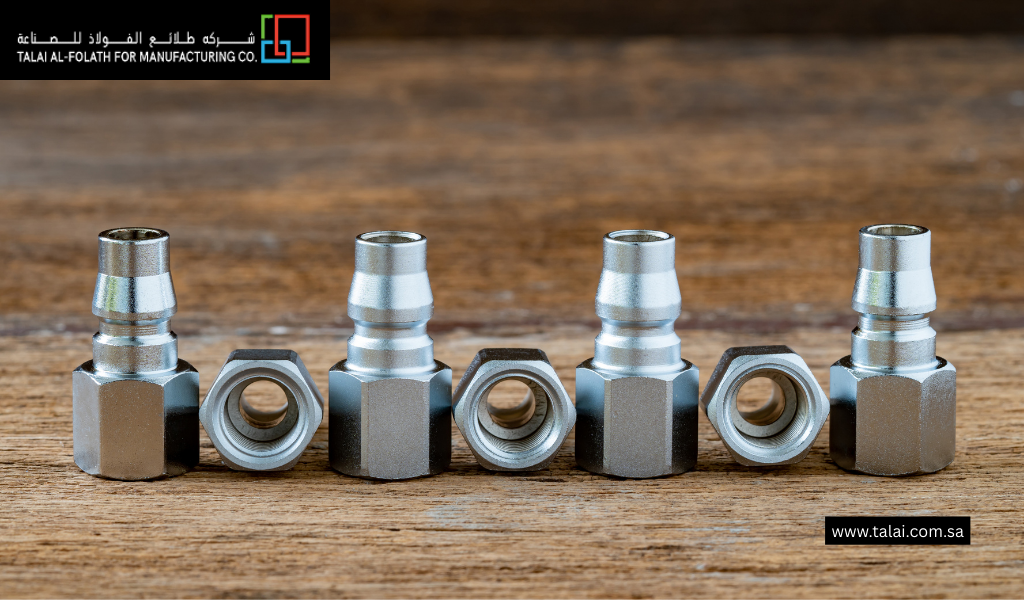
When it comes to structural safety, we think of big beams and heavy machinery. Rarely do we consider the small pieces that quietly keep everything intact. One such important component is the stainless steel coupler. It is small but yet also a very important provider of strength, stability and endurance in modern construction and industry.
With the highly intensive challenges buildings are facing today, dealing with heavy loads, varying weather conditions and long-term wear and tear, the right connection system is more important than ever. Stainless steel couplings are another great example of how something so small can be a big deal.
What is a stainless steel coupler?
A stainless steel coupler is a mechanical device for connecting two tempered steel rods (rebars) or threaded bars. Rather than overlapping lapped bars, which are traditionally used, couplers offer an efficient and robust mechanical connection.
This method offers several advantages:
- Strong and reliable load transfer
- Reduced material wastage
- Better alignment and precision
- Improved structural integrity
Constructed from stainless steel, these couplers offer good corrosion resistance, rust resistance and durability. This makes them very fit for long-lived infrastructure projects.
Why Stainless Steel Material Matters?
The material selection for the optimal operation of any coupler is indeed very important. The remarkable strength, durability and corrosion resistance of stainless steel material. These attributes are especially important in applications subjected to water, chemicals or high temperatures.
Stainless steel has a layer of chromium on its surface that prevents corrosion. This coating resists rust and increases durability. This extra protection can extend the life of structures – a valuable asset in construction projects as varied as bridges, marine facilities, tunnel building and industrial plants.
Opting for stainless steel isn’t just a matter of strength—it’s about longevity, dependability and safety.
Role of couplers in the safety of structures
The safety part of structural safety really relates to good and consistent load paths within the building or other type of structure. The structure is as weak as its weakest link.
Stainless steel couplers help in:
Ensuring Strong Load Transfer
They establish a direct mechanical connection between rebars, so loads are transferred without friction from one bar to the other with no weak points.
Reducing Congestion
Lap splicing of the regular practice results in overcrowding of reinforcement bars. Couplers eliminate non-essential play in joints and are therefore well suited for neat, accurate reinforcement layouts.
Enhancing Seismic Performance
Strong and durable connections are crucial in earthquake-sensitive regions. Dynamic loads better performance. Stricture is in close proximity.
Minimising Construction Errors
Couplers are designed to have accurate threading and fitting, reducing the reliance on manual tying of structural reinforcing bars to achieve a reliable reinforcing bar connection by allowing direct rotation of one and movement parallel to its axis (spinning and moving).
Applications Across Industries
While primarily used in construction, stainless steel couplers have applications across many different industries:
Tall buildings – easy connections to an array of floors
Flyovers and overbridges for heavy traffic loads
Maritime buildings – Protecting against corrosion by saltwater defences
Industrial Plants Sustained in Chemical Use
Infrastructure – And the infrastructure investments of today and their durability for decades.
The stainless steel used in these couplers offers good strength and excellent corrosion resistance, making them a popular choice on projects where performance is critical.
Read More: Top Metal Products and Manufacturers You Can Trust in Saudi Arabia
Benefits Over Traditional Methods
Many construction projects used to use lap splicing, in which rebars overlap and are tied together. However, this technique has some drawbacks.
Material Savings
Long lap splice lengths are not required, and the consequent reduction in steel of headers is due to the use of couplers.
Space Efficiency
In heavy reinforcement sections, couplers can minimise bar congestion and enhance flow and compaction of the concrete.
Faster Installation
Mechanical connection with male or female thread; this can be fitted fast and so shortens building times.
Consistent Quality
There is more consistent quality in factory-built couplers as opposed to hand-lapped.
In major projects, just relatively small gains in efficiency and safety can be worth a lot for the future.
Corrosion Resistance: A Key Advantage
Corrosion is one of the most dangerous things to structural healthiness. Reinforcement bars expand and crack the surrounding concrete as they rust, eroding a building’s structural integrity.
Waterstop couplers provide additional protection with stainless steel building material. The anti-rust protection means the performance doesn’t deteriorate even in:
Coastal areas
High-humidity environments
Chemical plants
Underground structures
This resistance means lower maintenance costs and a longer service life, making stainless steel couplers a smart investment.
Supporting Sustainable Construction
Today, sustainability is taking a front seat in construction. It is typically better for the environment, as stainless steel can be recycled and has a long life.
Couplers also lead to savings of steel compared to lap splicing. The less material used, the reduced environmental impact if strength and safety are not compromised.
Moreover, longer-lived buildings need less repair and reconstruction and also, over time, lower their carbon footprint.
Precision Engineering for Reliable Performance
Durable, high-quality stainless steel couplers with MES (machined precision threading) for no-worry operation and lifelong service.
Properly engineered couplers:
- Maintain alignment between bars.
- Deliver full tensile strength.
- Meet industry safety standards.
- Perform consistently under stress.
Accuracy counts because, even with slight misalignments, loads are impacted. Engineers will have more confidence in its structural integrity using well-designed couplers.
Quality Control and Testing
In order to be safe, stainless steel couplers require rigorous testing that includes:
- Tensile strength testing
- Torque testing
- Corrosion resistance checks
- Dimensional inspections
These tests confirm that the coupler works equally as well as, or better than, the adjoining reinforcement bars. Assuming they are installed properly, there is no gap at all in the structural connection.
Long-Term Cost Efficiency
On first look, mechanical couplers may seem like an extra expense over traditional lap methods. But you also have to take into account the total project life; in many cases it is cheaper.
Savings come from:
- Reduced material usage
- Faster installation
- Lower maintenance needs
- Improved durability
Stainless steel is resistant to corrosion and rust compared to other alternatives, so structures that are constructed with these couplers do not require frequent repair. It means lower operating costs and higher reliability.
Small Component, Major Responsibility
You might not even notice a coupler due to its size. Yet it carries immense responsibility. Secure connections are every load, vibration and environmental assault that travels through a structure.”
Bad quantities or low quality of the coupler will affect safety. Oppositely, a well-designed stainless steel coupler ensures quality, performance and peace of mind.
Several thousands of couplers will be required in big infrastructure jobs. … They bear collectively to the strength of the structure.
The Future of Structural Connections
Higher, stronger and greener materials is the cry as construction technologies keep advancing. Stainless steel is still at the top with its amazing features.
Mechanical joint systems are progressing as well, with improved configurations that provide better performance and reliability. Today couplers are the choice of contractors and engineers in a wide variety of high-performance structures.
Safety and environmental-awareness trends are leading to stainless steel couplers being preferred globally.
Conclusion
Couplers are a small component, yet they account for the safety of the structure. They’re of great importance in the contemporary building, serving to make sound and strong mechanical connections between two members, reducing material wastage, corrosion and corrosion damage.
Made from powder-coated steel - Durable and reliable power rack with safety bar catches. Whether it’s high-rise buildings, bridges or power plants – these small connectors bear big things every day.
For always in the society of engineers there is not just strength in the structure but also in what is unseen that binds it all together. Stainless steel couplers are a prime example of how miniscule components can have a big say on structural safety.