
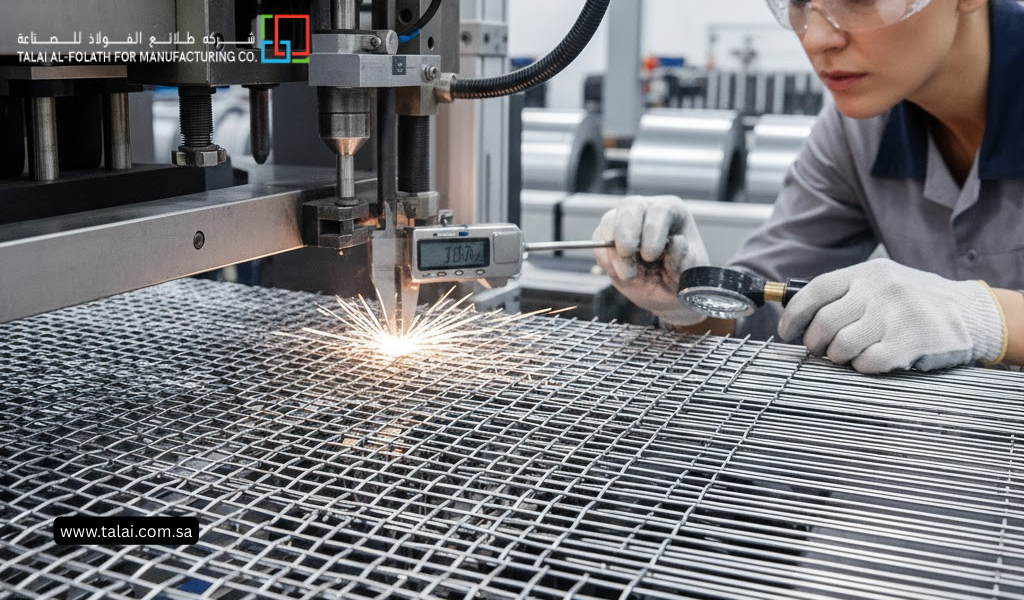
Stainless steel wire mesh is one of the most trusted materials in construction, industrial operations, filtration systems, and security applications. Its strength, long-lasting performance, and resistance to damage make it an essential product for engineers, contractors, and manufacturers. But the real value of stainless steel wire mesh depends on the commitment of manufacturers who produce it.
Today, leading stainless steel wire mesh manufacturers follow strict quality practices to ensure their products meet modern engineering expectations. These manufacturers focus on premium materials, advanced machinery, accurate testing, and reliable customer support. As industries continue to grow and demand stronger materials, the importance of choosing high-quality wire mesh becomes even more critical.
This detailed blog explores how top manufacturers maintain consistent quality and performance, what processes they follow, and why their products are trusted in construction and industrial environments. We also highlight how related suppliers, such as steel couplers suppliers, contribute to the overall quality of reinforcement systems.
Why Stainless Steel Wire Mesh Is in High Demand Today?
Before understanding how manufacturers ensure quality, it is important to know why stainless steel wire mesh has become a preferred choice across so many industries.
Stainless steel wire mesh offers advantages like:
- High tensile strength
- Rust resistance
- Long lifespan
- Smooth surface and uniform structure
- Ability to withstand heat, moisture, pressure, and chemicals
- Easy fabrication and installation
Because of these qualities, stainless steel wire mesh is used for:
- Concrete reinforcement
- Industrial filtration
- Safety barriers
- Storage racks
- Machine guards
- HVAC systems
- Interior and exterior architectural designs
- Security fencing
As infrastructure and industrial development grow, the demand for reliable wire mesh grows as well. This puts strong responsibility on manufacturers to deliver products that perform consistently under different conditions.
Read More: How to Choose Reliable Steel Rebar Suppliers for Construction Projects?
How Leading Manufacturers Ensure High Quality and Performance?
Top stainless steel wire mesh manufacturers follow a structured process at every step of production. Their approach combines technology, skilled labor, strict testing, and continuous improvement. Here is a complete look at how they maintain quality.
1. Selecting Premium-Grade Stainless Steel
The process begins with choosing the right raw material. High-quality stainless steel ensures the mesh remains strong, corrosion-resistant, and long-lasting.
Top manufacturers prefer:
- SS 304
- SS 316
- SS 316L
- Heat- and corrosion-resistant alloys
These grades are chosen based on their tensile strength and ability to withstand harsh environmental conditions. The purity of steel directly affects the durability of the final mesh.
Just as steel couplers suppliers choose high-grade materials to ensure strong and safe reinforcement joints, wire mesh manufacturers prioritize the finest raw steel to achieve precision and performance.
2. Advanced Wire Drawing Techniques
Before the mesh is formed, stainless steel rods are drawn into wires of specific thicknesses. Leading manufacturers use advanced wire drawing machines to ensure:
- Uniform wire diameter
- Smooth surface texture
- Consistent mechanical strength
- No internal or external defects
Uniformity is especially important because it affects how well the mesh handles pressure and vibrations. Any variation can weaken the entire structure.
3. Precision Welding for Maximum Strength
One of the biggest factors that defines wire mesh quality is the welding process. Manufacturers use high-precision automatic welding systems that ensure every joint is:
- Strong
- Clean
- Uniform
- Free from weak spots
This prevents breakage, bending, or deformation. Automated welding also improves consistency across large production volumes, which is essential for industrial use.
The welding technology used includes:
- Electric resistance welding
- Spot welding
- Automated mesh welding lines
The stronger the weld, the better the wire mesh performs under heavy loads, pressure, or industrial use.
4. Accurate Mesh Weaving for Specialized Applications
Not all stainless steel wire mesh is welded. Some industries require woven wire mesh made with precise interlocking patterns. Leading manufacturers use automated looms that create consistent weaving patterns such as:
- Plain weave
- Twill weave
- Dutch weave
- Reverse Dutch weave
Each pattern has a specific purpose. For example:
- Filtration industries use fine woven mesh
- Industrial screens need thick and strong weaves
- Chemical processing plants rely on corrosion-resistant patterns
Precision weaving ensures the openings are uniform, which is crucial for filtration and separation applications.
5. Heat Treatment and Surface Finishing
After the welding or weaving process, manufacturers perform heat treatment to relieve the stress in the wires. This improves:
- Flexibility
- Strength
- Lifespan
- Resistance to cracking
- Surface treatments such as:
- Pickling
- Passivation
- Galvanizing
- Polishing
are used to enhance corrosion resistance and overall appearance. A clean, smooth surface also helps the mesh perform better in filtration and mechanical applications.
6. Quality Control and Rigorous Testing
Quality testing is one of the most important aspects of production. Leading manufacturers follow strict inspection standards throughout the process. They test for:
- Tensile strength
- Weld integrity
- Wire diameter accuracy
- Opening size accuracy
- Corrosion resistance
- Load-bearing capacity
- Surface smoothness
Testing ensures that every roll, panel, or sheet meets engineering and safety standards before reaching the customer.
Modern companies also use digital monitoring systems and automated inspection tools to catch even the smallest deviation.
7. Customization for Industry Needs
Top stainless steel wire mesh manufacturers do not provide one-size-fits-all products. They offer customization for:
- Mesh size
- Wire diameter
- Sheet dimensions
- Strength levels
- Coatings and finishes
- Roll or panel formats
Different industries require customized mesh solutions. For example:
- Construction needs heavy-duty reinforcement mesh
- Food processing requires fine hygienic mesh
- Oil and gas sectors need corrosion-resistant materials
- Manufacturing plants require safety guards and enclosures
By offering custom solutions, manufacturers ensure the mesh performs perfectly in its intended environment.
8. Meeting International Standards
High-quality manufacturers make sure their products follow recognized global standards, such as:
- ASTM
- ISO
- BS
- EN
- DIN
Meeting these standards proves that the mesh is produced according to strict quality guidelines, making it suitable for critical applications.
This is similar to how trusted steel couplers suppliers follow consistent quality norms to guarantee the safety and performance of reinforced structures.
9. Advanced Packaging and Safe Transportation
Even after production, taking care of wire mesh is crucial. Manufacturers use proper packaging methods to prevent:
- Rust
- Scratches
- Damage during handling
- Deformation during transport
Well-organized packaging helps customers receive products that are in perfect condition and ready to use.
10. Technical Support and After-Sales Service
Reliable manufacturers do not stop at supplying the product. They offer:
Technical guidance
Installation instructions
Product selection support
After-sales service
This helps engineers and project managers choose the right mesh for their specific needs and apply it correctly.
Why Quality Matters for Construction and Industrial Projects?
Stainless steel wire mesh plays a vital role in:
- Structural reinforcement
- Load distribution
- Safety systems
- Equipment protection
- Filtration and separation
- Architectural elements
Poor-quality mesh can result in:
- Structural weakness
- Faster corrosion
- Installation failures
- Safety risks
- Higher maintenance costs
This is why choosing the right manufacturer is essential. The same principle applies when selecting steel couplers suppliers, as both materials work together to reinforce and stabilize structures.
How to Choose a Trustworthy Stainless Steel Wire Mesh Manufacturer?
Here are a few practical tips:
- Check material grade certifications
- Ask about testing and inspection reports
- Look for companies with advanced machinery
- Compare mesh quality, thickness, and strength
- Evaluate customization options
- Review customer feedback and project history
- Ensure consistent supply ability for large projects
Choosing the right manufacturer ensures long-term performance and safety.
Final Thoughts
Leading stainless steel wire mesh manufacturers focus on quality at every step—from selecting raw materials to welding, weaving, testing, and final inspection. Their commitment ensures that the mesh performs reliably in demanding environments.
As industries continue to grow, the need for durable, strong, and precise wire mesh becomes even more important. Working with trusted manufacturers and reliable steel couplers suppliers ensures that construction and industrial projects maintain the highest standards of safety, strength, and long-term performance.
Related FAQs on Steel Couplers Suppliers
1. What makes stainless steel wire mesh high quality?
High-quality stainless steel wire mesh comes from premium steel grades, precise welding or weaving, and strict testing for strength and accuracy.
2. Why is stainless steel wire mesh used in construction?
It is used because it provides strong reinforcement, resists corrosion, and supports long-term structural performance.
3. How do manufacturers test stainless steel wire mesh?
Manufacturers check wire diameter, weld strength, mesh openings, corrosion resistance, and overall load capacity.
4. Is stainless steel wire mesh durable in harsh conditions?
Yes, especially when made from grades like 304 or 316, which resist moisture, chemicals, and heat.
5. What industries commonly use stainless steel wire mesh?
Construction, industrial filtration, manufacturing, safety equipment, and architectural applications.