
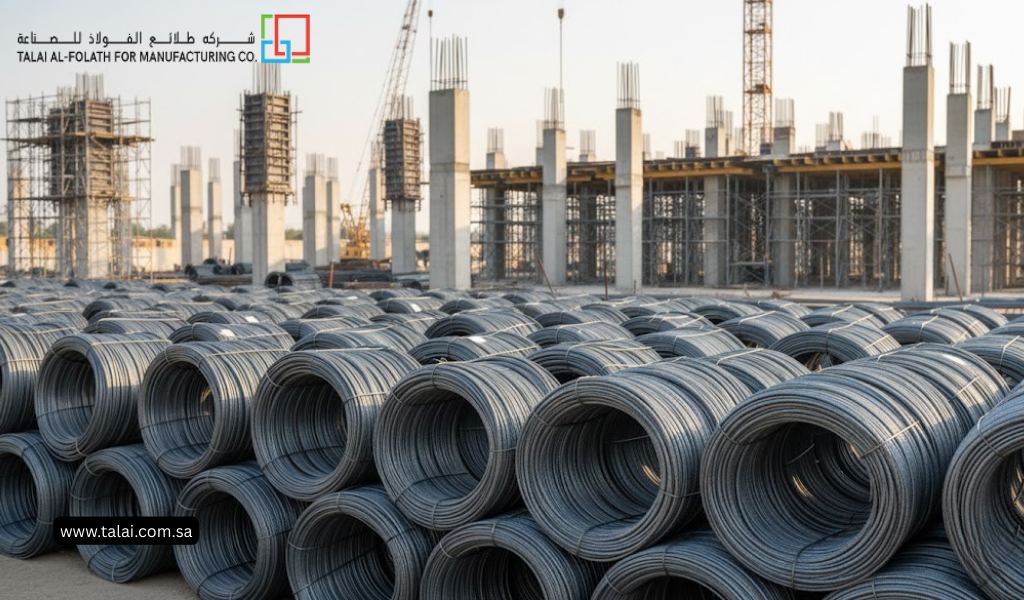
When you’re making anything that’s intended to endure — whether it’s a home or a skyscraper or a bridge — the ability to withstand powerful forces without breaking (or excessively bending) is key. The material of concrete itself is strong, but in only one direction: downwards pressure. When tension or stretching gets involved, it requires a little help. Enter reinforcing steel coils, which are also known as steel rebar coils.
Though they’re usually buried inside concrete, these steel coils are the unsung heroes of construction. You maintain the stability of buildings, the safety and integrity of bridges and the strength of highways for decades. And now, demand for them is growing faster than ever.
Here’s a closer look at why that is, where they’re being used and why it’s making them an integral part of modern construction.
What is a reinforcing steel coil?
What is reinforcing steel coil? Now, think of it as a giant spring made out of steel — but instead of bouncing up and down, it reinforces concrete.
Concrete is great at withstanding compression (where weight is pushing down), but it struggles against tension (pulling or bending forces). While concrete is good in compression, its weakness in tension means that it will tear under excess stress.
Steel coils can be easily transported and formed. They are not straight steel bars; they can be bent, cut to any shape and easily adjusted to create the design of any formwork – whatever the brisk construct. That’s one way builders are fans.
Why Steel Rebar Coils Are in High Demand?
There are several reasons why coils of reinforcing steel are now in such tremendous demand:
Rapid Urban Growth
Cities are expanding fast. More buildings, from high-rises to office complexes, can mean more reinforced concrete — and that means additional steel coils to tie it all together.
Massive Infrastructure Projects
Governments worldwide are spending on roads, bridges, airports and metro systems. And all those projects are built with reinforced concrete, which means more steel rebar coiled into cages and poured around inside.
Safety Comes First
The building codes are more demanding than ever. Engineers are ordering high-grade steel coils to ensure buildings and infrastructure are safe and durable.
Cost-Effective Construction
Steel coils save money. They minimise waste, save on transport costs and allow buildings to go up faster. Those savings can really add up on larger projects.
Eco-Friendly Building Practices
Steel is 100% recyclable. Steel coils are increasingly being used by builders as part of a sustainable construction approach, further feeding demand.
Steel Rebar Coils Uses Where are steel rebar coils used?
A reinforcement steel coil They are an extremely flexible product. These are some of the most common places they show up:
Buildings: Steel coils are used in building materials, including beams and slabs, to help support structures and reinforce concrete.
Bridges and flyovers: These structures are burdened by heavy traffic each day. A couple of steel coils also hold them stable and safe for decades.
Highways and Roads: Concrete roads require steel reinforcement; if they do not have it, the roads would bend under heavy load traffic and therefore crack.
Industrial Buildings: Factories, warehouses and power plants use steel coils to cope with vibration, heavy equipment and environmental extremes.
Water Projects: Dams, reservoirs, and water treatment into use with steel coils to prevent seepage and structural damage.
Advantages to Using Steel Rebar Coils
There are several advantages to using reinforcing steel coil:
More Durable Structures: Traditional concrete may crack under tension by itself. Steel coils offer the strength to hold up under bending and stretching.
Flexibility: Coils come in their own package and can be shaped and cut to any size or shape, simplifying projects with spreaders.
Durable: Structures made of reinforced concrete are more durable and can resist the effects of time, weather and heavy loads.
Budget Friendly: Little waste and ease of fitting also lead to overall savings in material cost and labour.
Environmentally Friendly: Steel is a recyclable material and can be reused in future projects.
Selecting the Correct Rebar Steel Coil
Steel coils come in many forms. Here’s what to look for:
Steel Grade: Higher-grade steel such as Fe 500 or Fe 550 offers greater tensile strength too.
Diameter and Size – You can choose a suitable size for your project to complete bending and cutting more smoothly.
Resistance to Rust: Coated or treated steel is a good find, particularly in humid coastal environments.
Reliable Source: Purchase from trusted sources to guarantee you receive qualified high-grade steel.
Quality Standards Matter
Safety starts with quality. Ensure that your metal coils are in compliance with reputable standards like:
ASTM A615/A706: Deformed and plain welded bars for steel.
ISO 6935: Standard for concrete reinforcement.
BIS 1786: Indian standard for high-strength bars.
It is durable and made of high-quality steel, so you can ensure that your building will be safe over time.
The Future of Steel Rebars in Coils
The demand for rebar coils is only going to increase. Cities are growing, infrastructure is being developed and builders are searching for strong, economical and green materials.
Advances in technology are enabling us to make steel stronger and more resistant to rust. Construction is being speeded up and costs brought down by prefabricated concrete elements using steel coils. In a word, steel rebar coils are not going anywhere — and if anything, their place in construction worldwide is only becoming more dominant.
Final Thoughts
The rise in demand for reinforcing steel coils reflects a larger trend in construction: the need for safety, durability, and efficiency. These coils might be hidden inside concrete, but they play a vital role in keeping structures strong for decades.
Whether you’re a builder, engineer, or contractor, investing in high-quality steel rebar coils means safer buildings, cost savings, and environmentally friendly construction. As cities grow and infrastructure projects expand, steel coils will remain at the heart of reinforced concrete construction.
FAQs About Steel Rebar Coils
Q1. What is a reinforcing steel coil used for?
It’s used to strengthen concrete structures like buildings, bridges, and roads by adding tensile strength.
Q2. Why choose coils over straight steel bars?
Coils are easier to transport, cut, and bend, which reduces waste and labor costs.
Q3. Are steel coils environmentally friendly?
Yes. Steel is recyclable, making coils a sustainable choice for modern construction.
Q4. Which steel grades are common for coils?
Fe 415, Fe 500, and Fe 550 are commonly used, with higher grades offering more strength.
Q5. How do I make sure the steel is good quality?
Always check certifications like ASTM, ISO, or BIS, and buy from trusted suppliers.