
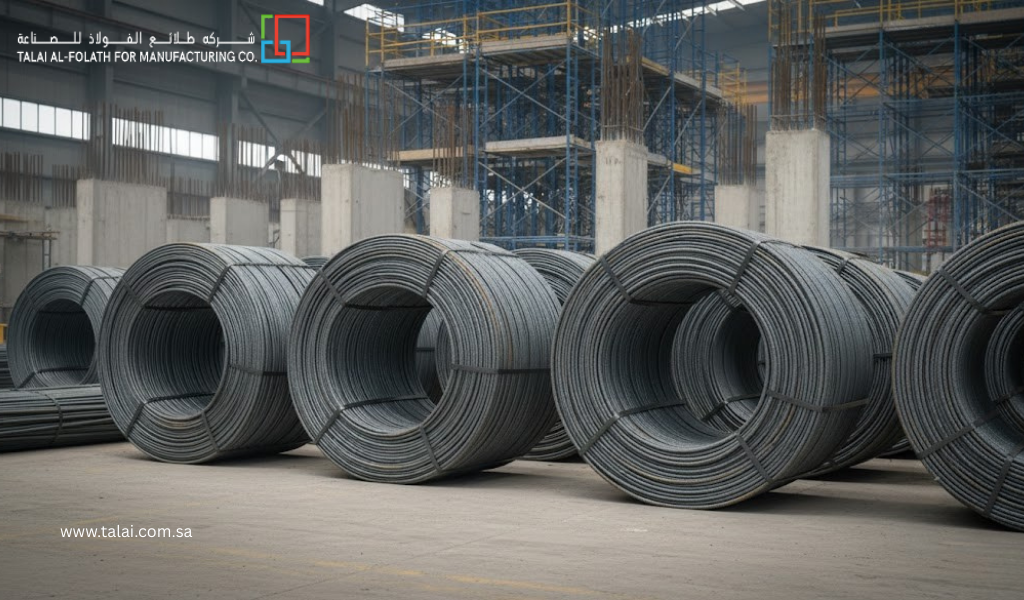
When it comes to mixing cement and rebar, the unsung concrete hero of the construction industry is steel rebar coils, or, as they’re often referred to in some circles, reinforcing steel coils. Construction projects don’t always show off these coiled steel rods, but they are the skeleton that keeps concrete structures like bridges, highways and high-rises standing tall for decades.
In this post we’ll be covering all you need to know on steel rebar coils: their advantages, typical use cases, quality-related standards and why they are gaining favour in large infrastructure projects everywhere.
What Are Steel Rebar Coils?
Rebar are long, steel, threaded rods that are made of carbon steel or their derivative metals, which allows them to be used in concrete with higher resistive mechanical stress. They are mainly used in structural applications to capacitate concrete as it takes tensile loads. Placed under compression, concrete is a nearly ideal building material, but tensile and flexural strengths are low. The tensioning forces are then absorbed by adding steel rebar coils that decrease cracking and keep the structure durable.
Steel rebar in a coil Unlike straight lengths of steel rebar, the distribution services back-of-reel product is bent into shape and secures bundles for shipping. It comes coiled, making it convenient to move from place to place while maintaining its overall integrity when cut to length as needed in construction jobs. Coils come in various diameters and are available in several grades to satisfy different construction applications.
Advantages with Steel Rebar Coils
Rebar in coils is nothing but steel rods “with a brain”, and it is your smart investment for construction. Here are some key benefits:
Strength and Durability
There is tensioned concrete, too, which can crack unless it is reinforced with Steel Rebar Coils. The conjunction allows the constructions to be resistant to high loads, tremors, and even earthquakes. High-performance reinforcing steel coil improves bar life and lowers the maintenance cost over the life of the project.
Flexibility and Ease of Use
Steel rebar coils are flexible, which is one of their main benefits. Slitted steel can be curved and cut to shape on site to satisfy designs. This translates into a faster and easier installation versus straight bars. Construction teams can also shape the coils to any form or structure, minimising material waste.
Cost-Effective
While the first outlay on coils of steel rebar can be higher than straight bars, they can save you an absolute fortune in wastage and labour costs, as they are slender-profiled for easy handling yet able to bend into shape. They’re great for large infrastructure projects where cutting and bending steel on site could save a great deal of time — and a lot of money.
Corrosion Resistance (after proper heat treatment)
Modern steel rebar has been gaining popularity, as it is treated with a rust-resistant bath of paint. [6] These coatings can offer good protection for a period but generally last only around 47 years and have no structural upfront capacity to endure bending around corners. In particular in moist, coastal and/or industrial environments to assure long-term structural soundness.
Uniform Quality
Structural steel Coils and plates For commercial applications Another fine product from Dimond Quality: reinforcing steel coils are produced to a strict quality regime which ensures there is no compromise in size, strength or chemical composition. Such uniformity can help prevent weak points in concrete structures, which is critical for multi-storey buildings, bridges, tunnels and other infrastructure.
Below is a list of some of the most common uses for rebar in coil form.
The versatility and flexibility of steel rebar coils make them tremendous assets, as they can be used for many applications throughout the construction industry. These are some of the prime uses:
Bridges
As bridges are subjected to heavy loads, changes in temperature and vibrations. Steel mill coil for bridges is a good use of strength and is strong and long-lasting. The coiled shape makes it possible for engineers to design curved or unusually shaped bridge elements without sacrificing strength.
High-Rise Buildings
The forces of tension and compression are extreme in high-rise buildings. Steel rebar coils, a group of which are pictured above, reinforce the concrete structure, enabling buildings to withstand wind, seismic activity and stress. Flexibility of use means engineers are able to design complicated architectural arrangements without compromising on safety.
Highways and Roads
Asphalt roads and pavements endure cracks due to the intensive nature of heavy load traffic and environmental stress. By using steel rebar coils, the life of the pavement can be prolonged while its constant repair is eliminated.
Industrial Structures
Loading factories, warehouses and other industrial buildings usually requires heavy-duty floors and walls to hold a lot of weighty machinery. Rebar coil is ideal for this kind of use, with its durability, ease of installation and flexibility.
Water Projects
Dams, canals and water treatment plants depend on robust cement construction. The steel rebar coils add extra resistance to water pressure, thermal variations and chemical attacks over time.
Normative Standard for Rebar Coils of Metal (except) Post category: Standardsaskell Quasi-Normative and Normative Standardsaskell Quality ‘speciality bldgst steels’ successfulsts INSTEEL Wikipedia Erotelenzy get the latest download: Page 3 Guide to Cambridge Metals & Materials Activities. If an area is left blank or contains “N/A”, the class average will be considered a zero!
It is important to ensure that you have the right quality of steel rebar coils to use in construction. Below are the major elements of quality standards:
Composition and Grade
High-strength steel rebar coil is crafted from carbon steel and has a mixture of iron along with carbon and other elements in good quantity. Grade indicates the testing methods required for a given application and what to expect in terms of tensile strength and appropriate use. Popular grades are Fe 415, Fe 500, and also higher grades with additional strength, e.g., Fe 550.
Diameter and Size Uniformity
Reinforcing steel comes in various diameters, typically between 6 mm and 16 mm or larger. Consistency of size and thickness is important to prevent weak spots in concrete structures. The quality coils are produced to the precise dimension sverzeichnis. The dimensions, weights and technical specifications specified in this catalogue are not binding for contract purposes.
Tensile Strength and Bendability
The steel rebar coils must be strong enough to sustain tension but also flexible enough that they can bend without breaking. Most manufacturers perform tensile and bend testing to verify the coils comply with building specifications.
Corrosion Resistance
For projects in wet or coastal environments, corrosion-resistant coatings or galvanised steel rebar coils are employed. The use of high-quality products also results in minimal rusting, which means a longer life for the structure.
Certification
Always try to find steel rebar coils that are certified from well-known sources, such as ASTM, IS (Indian Standards), or BS (British Standards). The certification guarantees that the springs are durable and safe for use in building.
How to Select the Perfect Steel Rebar Coil?
Selecting the appropriate steel rebar coil can be a huge boost to your construction efficiency and structural safety! Here are some practical tips:
Check the Grade: Find out if your project requires a specific steel grade. Higher-quality steel is appropriate for high-rise buildings and heavy-load structures.
Check the Supplier: Choose reliable suppliers who offer tested and certified coils.
Think About Corrosion Resistance: Coated or epoxy-treated steel rebar coils are appropriate for outdoor or high-moisture projects.
Measurement and planning: Select coils that match your product strictly to minimise waste and cutting costs.
Quality Inspection: Check for the same diameter, an even surface and a good shape.
Conclusion
Steel rebar coils, which are also referred to as reinforcing steel coils, play an essential role in modern construction. They reinforce concrete, provide durability and may be designed for a variety of decorative possibilities. By understanding the role they play in construction, as well as their applications and quality standards, builders and engineers can make decisions that are well-informed, never compromising the safety, durability or cost-effectiveness of projects.
The choice of quality, certified rebar steel coils is the best you can make today for a durable construction tomorrow.
FAQs About Steel Rebar Coils
Q1: What is the difference between straight rebar and steel rebar coils?
A1: Straight rebar comes in long, fixed-length rods, while steel rebar coils are rolled into coils. Coils are easier to transport, store, and bend to shape, making them ideal for flexible designs.
Q2: Why are steel rebar coils important in construction?
A2: They provide tensile strength to concrete, prevent cracks, and increase durability, ensuring structures can withstand heavy loads and environmental stress.
Q3: Can steel rebar coils be used in all types of buildings?
A3: Yes, they are versatile and can be used in bridges, high-rise buildings, roads, dams, and industrial structures.
Q4: How do I choose the right grade of reinforcing steel coil?
A4: The grade depends on the project’s load requirements. Higher grades like Fe 500 or Fe 550 are suitable for heavy-load and high-rise structures.
Q5: Are steel rebar coils resistant to corrosion?
A5: Standard steel can rust, but corrosion-resistant or epoxy-coated steel rebar coils are available for high-moisture and coastal environments.