
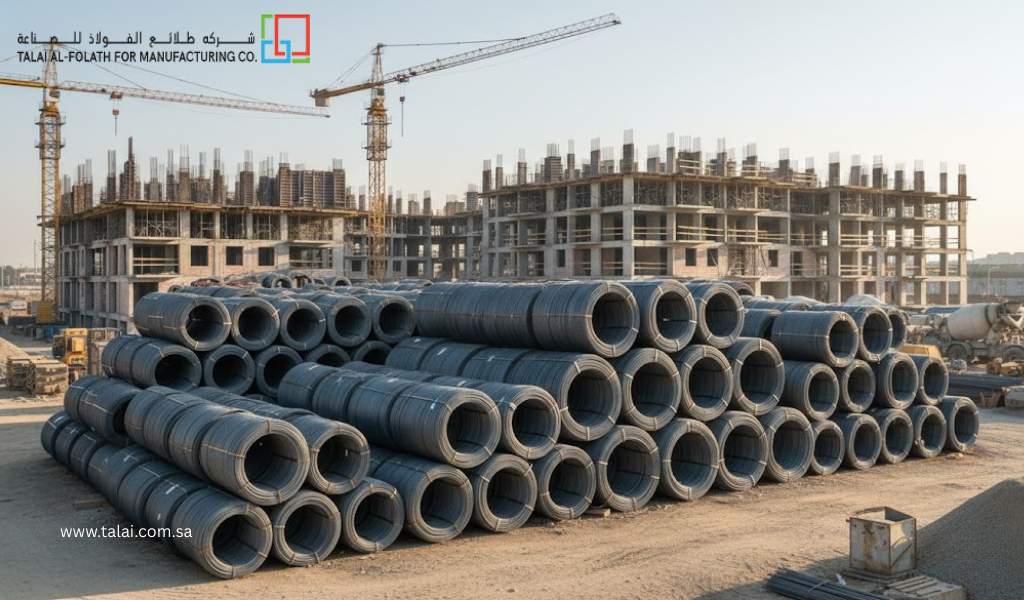
If you’ve ever driven over a bridge, walked on a highway or entered a high-rise building, chances are good that you were supported — literally and figuratively — by steel rebar coils, known in the industry as reinforcing steel coil. Hardly any of us have heard of the coiled steel rods used to reinforce concrete, but they are performing one of the most critical roles in construction ― keeping concrete strong, safe and durable.
More and more, huge infrastructure projects being built around the world have turned to these steel coils in recent years. But why are they so popular? Let’s take a closer look.
What Are Steel Rebar Coils?
Steel rebar coils are just steel rods rolled up into coil form. They are used to make reinforced concrete, which is strong at resisting compression (squeezing) but weak when twisted or stretched (tension). The coils function as a sort of backbone, imparting to concrete the strength it requires in order to support heavy loads and avoid cracking.
What makes steel rebar coil different from normal straight rebar is the flexibility. Coils are easily bent, cut, and formed on the job site to conform to the exact requirements of a project. This makes them ideal for complex structures, whether it’s a curved bridge, a tunnel or the likes of a winding spiral staircase in a skyscraper.
Why Demand For Reinforcing Steel Coils Is On the Rise?
There are a number of reasons why rebar in coils is becoming increasingly popular on today’s construction jobs.
Cities Are Growing Fast
Urbanisation proceeds at an unprecedented rate. Our cities most certainly aren’t getting smaller: roads, airports, metro systems and skyscrapers are being built to accommodate growing populations. Big infrastructure projects require materials that can handle heavy traffic, harsh weather and many decades of use.
Steel Rebar Coils offer that extra supplement of strength and resistance. They keep concrete and its structures safe and durable for the long haul.
Cost Savings Are Key
Every building project has a budget, and every architect finds it difficult to stay on. Steel rebar coils also help reduce waste, since they can be cut and shaped on-site. Instead of straight bars, which may wind up with scrap left over, coils let workers take just what they need.
They’re also more convenient to transport and store, saving time and money on either end of every project.
Safety and Durability
Safety can’t be negotiated on large infrastructure projects. Bridges, highways and metro tunnels need to handle heavy loadings and long-term usage. Coils of steel rebar reinforce concrete, which helps prevent cracks and bends in the surfaces of buildings and roadways.
When you’re dealing with a matter of life and death, it’s a no-brainer to use strong, dependable steel.
Flexibility Makes Life Easier
Indeed, one of the greatest benefits of steel rebar coils is their flexibility. Require a curved bridge or spiral stairway? Coils can be flexible and bend without breaking, unlike straight rebars.
There are also fewer joints in the structure, which equals fewer weak points, meaning it makes buildings, bridges and tunnels stronger all round.
Environmentally Friendly
Contemporary construction is going green, and steel is on board. It is 100% recyclable, and its use of coils cuts down on material waste in the field. For those developers wishing to conform to green building standards, the steel rebar coils are an environmentally friendly choice.
Technology Is Improving the Steel
Steel production has changed a great deal. What you’ll find in today’s steel rebar coils are stronger, more uniform and will last longer. With modern manufacturing technology, we can make them longer with fewer joints consistently at a higher quality, and that makes construction faster and safer.”
Efficiency Matters
Time is money in construction. Steel rebar coils are faster to install than individually placing single straight bars. By cutting out weeks of time from a project timeline, you can also add up to big savings on labour and getting it done. That’s an enormous advantage for big infrastructure projects.
Global Construction Boom
Infrastructure is booming worldwide. Governments are spending heavily to develop roads, smart cities, metro rail and industrial projects. With all the construction going on, civil engineers are opting to use steel rebar coils because they’re convenient, strong and reliable.
Typical Applications for Steel Rebar Coils
Rebar coils are very versatile products which can be utilised in almost all major civil works:
Bridges and viaducts: Strengthening of decks, piers and columns
Highways and roads: To avoid cracks and potholes
Tunnels and subway lines: Bend flexible to round shapes easily
University of Maroua – High-rise buildings: Columns, beams and slabs strengthening
Dams and reservoirs: For massive concrete structures subjected to the pressure of enclosed liquid.
The Right Reinforcing Steel Coil & How to Pick It
Selecting the correct coil can have a big impact on quality and efficiency. Here’s what to keep in mind:
Verify Quality and Standards: Ensure the steel complies with international or local standards.
2) Consider Coil Size and Weight: Select sizes of hose that correspond to your own construction equipment.
Consider the Tensile Strength: A strong tensile strength will offer better resistance to loads on heavier buildings.
Deal with Good Suppliers: Quality and on-time supply are assured.
Sustainable Options: Bonus for eco-warriors, steel from sustainable processes.
Also Read: How Metal Products Manufacturers Are Adapting to Changing Market Demands?
Advantages of Employing Steel Rebar Coils
Reduced Material Waste and Cost
Faster installation and reduced labour
Malleable for intricate or shaped designs
Stronger, safer structures
Fully recyclable and environmentally friendly
Cost-effective for large-scale infrastructure projects
We are the future of steel rebar coils.
And as infrastructure projects increase in size and complexity, so too will the request for more reinforcing steel coils. Urbanisation, industrial development and government investment will continue driving demand for powerful, reliable construction materials.
New technologies — including corrosion-resistant or high-strength coils — will make them even more precious. Eco-friendly construction techniques will also boost their demand; steel coils will become not just an alternative but a requirement.
Conclusion
Though not glitzy, steel rebar coils are vital to building modern infrastructure. Whether for bridges, highrises, highways or tunnels – reinforcing steel coils mean strength, flexibility, safety and cost control!
For construction companies and engineers, they’re more than just steel—they’re also a good investment in buildings, bridges and roads that will stand for decades to come.
FAQ’s About Steel Rebar Coils and Straight Rebars
Q1: What’s the difference between steel rebar coils and straight rebars?
A: Coils are rolled steel rods that can be bent and cut on-site, reducing waste and speeding up installation. Straight rebars come in fixed lengths and are less flexible.
Q2: Why are reinforcing steel coils preferred in big projects?
A: They are cost-effective, durable, flexible, and faster to install, making them ideal for bridges, tunnels, and high-rises.
Q3: Are steel rebar coils eco-friendly?
A: Yes. They are fully recyclable, and using coils reduces material waste during construction.
Q4: Can they handle heavy loads?
A: Absolutely. They reinforce concrete to withstand high pressure and heavy traffic.
Q5: How are steel rebar coils supplied?
A: They come in rolls of different weights and lengths, ready to be cut and shaped on-site.