
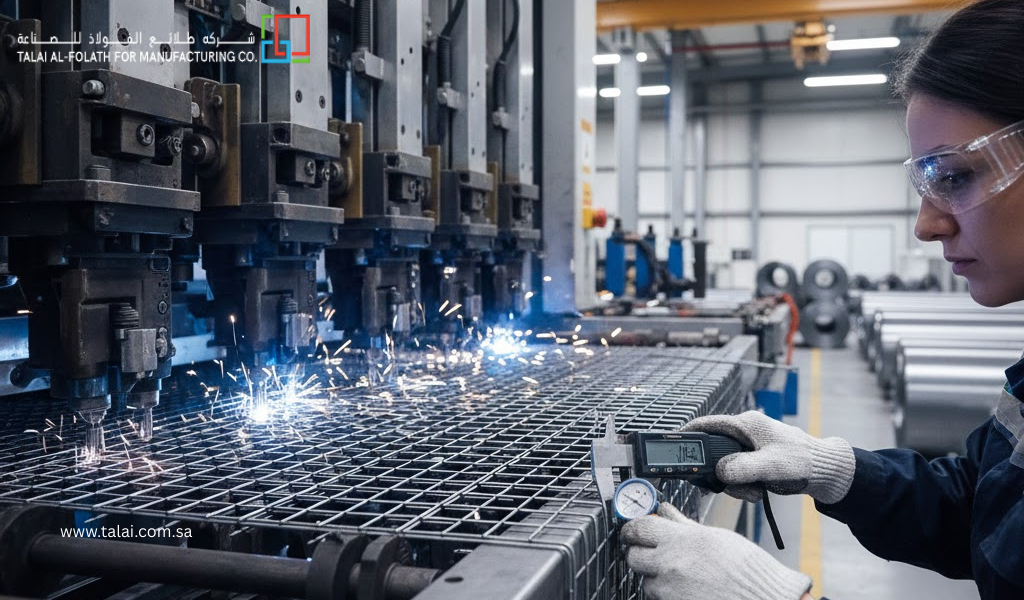
Wire mesh is one of the most commonly used materials in construction, industrial projects, agriculture, roadwork, and safety applications. Whether it is supporting concrete, reinforcing foundations, or serving as protective barriers, wire mesh needs to be strong, reliable, and long-lasting.
In today’s fast-growing construction environment, modern wire mesh manufacturers play an important role in ensuring that the materials used on-site meet the highest standards of performance. With the help of advanced technology, improved manufacturing methods, and strict quality testing, they are able to produce wire mesh that can handle heavy loads, harsh weather conditions, and long-term use without losing strength.
This blog explains how modern wire mesh manufacturers achieve high strength and durability — and why their work matters in today’s construction and industrial sectors.
Read More: How to Ensure Quality in Your Cut and Bend Rebar Supply?
Use of High-Quality Raw Materials
Strength always begins with the right materials. Modern wire mesh manufacturers do not rely on low-grade metals. Instead, they work closely with trusted steel manufacturers who supply high-strength steel wire rods.
These raw materials are chosen based on:
- Tensile strength
- Corrosion resistance
- Flexibility
- Consistency in chemical composition
By starting with superior steel, manufacturers ensure the final product can withstand pressure, heat, and environmental challenges. Strong raw materials lead to strong wire mesh — it’s that simple.
Precision Wire Drawing for Consistent Thickness
Once high-quality steel rods are selected, they go through a process called wire drawing, where the rods are pulled through a series of dies to achieve a specific wire diameter.
This step is important because:
- Even thickness ensures equal strength across the mesh
- It prevents weak spots
- It improves bonding with concrete
- It maintains uniform weight and performance
Modern wire drawing machines use computerized settings to control speed, pressure, and diameter, ensuring that each wire meets exact standards.
Advanced Welding and Weaving Technology
Wire mesh is created either by welding or weaving the wires together. Both processes require accuracy and proper alignment to maintain durability.
Welded Mesh
In welded mesh, each wire is joined using automatic welding machines. These machines apply equal heat and pressure at every joint.
Benefits include:
- Strong bonding at intersections
- Better load-bearing performance
- Smooth surface finish
- Reduced risk of wire breakage
Welded mesh is widely used in concrete reinforcement, boundary fencing, industrial floors, and heavy construction.
Woven Mesh
Woven mesh is created by interlacing wires in a pattern. Modern weaving machines ensure:
- Tight and accurate gaps
- Strong locking between wires
- Smooth edges
- Good flexibility
Woven mesh is often used for filtration, safety nets, protective covers, and industrial applications.
Both methods ensure that the final product is strong enough to handle repeated pressure and long-term stress.
Corrosion Protection and Surface Treatment
One of the biggest dangers to wire mesh is rust. If the steel rusts, it weakens over time, reducing the mesh’s ability to support concrete or withstand outdoor exposure.
Modern manufacturers use various treatments to protect wire mesh from corrosion:
Galvanization (Hot-Dip or Electro-Galvanized)
A zinc coating is applied to the mesh, forming a strong protective layer.
PVC Coating
A colored plastic coating is added, making the mesh weather-resistant and visually appealing.
Stainless Steel Production
Some manufacturers also offer stainless steel mesh, which naturally resists rust.
These treatments extend the lifespan of the mesh and ensure durability in different environments such as coastal areas, industrial sites, farms, or high-moisture zones.
Strict Quality Testing and Certification
Modern wire mesh manufacturers follow strict quality control procedures at every stage. This includes:
- Tensile strength tests
- Bend and flexibility tests
- Weld shear strength checks
- Corrosion resistance tests
- Dimensional accuracy inspections
Quality testing helps ensure the mesh will perform well once installed at construction sites. It also increases trust among contractors, engineers, and material suppliers.
In many cases, manufacturers work closely with steel manufacturers or steel couplers suppliers who also follow strict testing guidelines. This combined supply-chain reliability results in stronger and safer buildings.
Automated Machines for Precision and Efficiency
Manual production often leads to uneven joints, incomplete welds, or inaccurate spacing. Modern wire mesh manufacturing uses automated machines that are controlled by software systems.
This helps ensure:
- Accurate spacing between wires
- Perfect alignment
- Consistent welding temperature
- Fast production speeds
- Fewer human errors
Automation also allows manufacturers to produce custom mesh sizes, different thicknesses, and specialized designs for unique project requirements.
Customization Based on Project Needs
Construction and industrial projects often require wire mesh in different sizes, thicknesses, and patterns. Modern manufacturers can produce:
- Heavy-duty mesh for concrete reinforcement
- Fine mesh for filtration and screening
- Medium-grade mesh for fencing
- Safety mesh for workers and equipment
The ability to customize ensures that each project receives the exact type of mesh needed for maximum performance and safety.
This flexibility also benefits companies working with steel couplers suppliers and other reinforcement product providers, as they can source different steel components from one reliable supply chain.
Better Bonding with Concrete
In reinforced concrete works, wire mesh plays a major role in controlling cracking and increasing strength. Modern wire mesh is designed to bond better with concrete due to:
- Ribbed wire surfaces
- Uniform gaps
- Accurate welds
- Consistent thickness
This creates a stronger connection between steel and concrete, improving durability and reducing structural problems in the future.
Strength Testing Under Real Conditions
To ensure the mesh will perform well on-site, manufacturers conduct real-world simulations such as:
- Pressure tests
- Impact resistance testing
- Long-term durability analysis
- Environmental stress tests
These tests show how the mesh behaves under loads, temperature changes, or harsh conditions. Only wire mesh that passes all tests is approved for delivery.
Commitment to Industry Standards
Modern wire mesh manufacturers follow international standards such as:
- ASTM
- ISO
- BS (British Standards)
- EN Standards
This commitment helps construction companies, engineers, and government agencies trust the quality of the product.
Manufacturers also collaborate with steel manufacturers and reinforcement product suppliers to ensure a complete, standardized supply chain.
Conclusion
Modern wire mesh manufacturers play a vital role in today’s construction and industrial sectors. Through the use of high-quality steel, advanced machinery, strict testing, and protective treatments, they produce wire mesh that is strong, durable, and reliable for long-term use.
Whether used for concrete reinforcement, fencing, industrial tasks, or safety applications, the strength of wire mesh depends on careful manufacturing and strict quality control. With strong partnerships between steel manufacturers, wire mesh producers, and steel couplers suppliers, the construction industry benefits from safe and consistent materials.
As technology continues to improve, wire mesh manufacturing will only become more precise, more efficient, and more dependable — helping support stronger buildings, safer structures, and longer-lasting infrastructure.
Voice Search–Friendly FAQs
1. How do manufacturers make wire mesh strong?
They use high-quality steel, precise welding, and strict testing to ensure strength.
2. What makes wire mesh durable?
Protective coatings, good materials, and strong welds help the mesh last longer.
3. Why is wire mesh used in construction?
It strengthens concrete, prevents cracking, and improves safety.
4. How do I choose a good wire mesh manufacturer?
Look for certified materials, quality testing, and advanced production methods.
5. Does wire mesh need corrosion protection?
Yes, galvanizing or PVC coating helps protect it from rust and damage.